August 31, 2022

Can children's clothing sizes be improved?

Little girl in a field

This blog is part of a series about The Essential Guide To Children's Clothing.

Any person that shops for children's clothing often becomes frustrated in their shopping experience. There appears to be a disconnect between what the retailer or brand are stating is one size and what the child actually fits. Why does this happen? Is there a better way?

It is true that age based size labels are sometimes inaccurate, or at least appear inaccurate. A child's body size and shape is influenced by a lot of different factors. Those factors include genetics, ethnicity, income demographic, diet, and nutrition. Children's clothing sizes vary because of this and other factors.

Manufacturers specialize on product type and a customer profile. This is true even in children's clothing. There is a size standard which exists for children's clothing, but manufacturers and designers will adapt or modify their product to fit their customer profile. This is not a bad thing. Children are individuals with their own unique characteristics. 

Many people complain that there needs to be a clear standard and by conforming to that standard we will solve sizing problems. Is it realistic to compel the industry to conform to a single size standard for children? By doing this, you will be guaranteed to never find clothing that fits all children at all times. There would always be a child that will not find clothing that fits if there is only one standard. Flexibility is needed in such a diverse marketplace. So while there is a general size standard that can be purchased, it may or may not be followed all that closely.

There are ways to make things easier for customers. Providing clear size charts and how to measure guides in the retail store and online can help customers select the right size. While it may be frustrating, customers have the ability to shop the market for alternate brands or sizes that fit their child. Variation is actually a good thing.

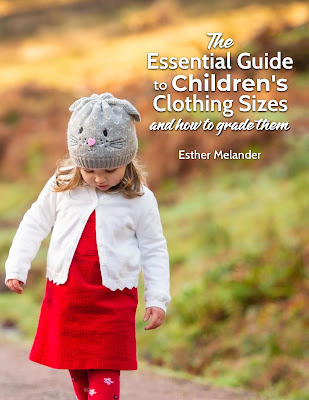
For this and more, see The Essential Guide to Children's Clothing Sizes.
August 29, 2022

How did children's clothing sizes originate?

Children's Clothing Sizes

This blog entry is part of a series on The Essential Guide to Children's Clothing Sizes.

If you were to shop for children's clothing in any department or big box store, you will find the clothing arranged by sizes and age. Baby/Infant, Toddler, 4-6x, and 7-16 sizes are sub-categories of children's clothing sizes that have an association with the age of a child.

In the early 1900's, children's clothing sizes were even more general. There were two simple general sizes - infant and child. At that time children's clothing was still made at home. As the industrial revolution continued to gain steam, children's clothing eventually became available in retail stores. Retailers quickly realized they needed a way to market children's clothing to parents. They also wanted to provide a wider range of sizes so they could sell more product. With the influence of George F. Earnshaw and the trade organizations that existed at that time, retailers and manufacturers adopted a size system for children's clothing with size labels based on age.

Age based sizing became the de facto standard for children's clothing in the United States. It is a system that evolved almost naturally for practical reasons. It was easy to understand by everyone including manufacturers, retailers, and customers. It was a practical way to organize and market product.

This system continued without any confirmation from any sizing studies for many years. So in that vain, the U.S. Home Economics Department and the U.S. Department of Agriculture commissioned a body measurement study of children in the 1930's. The goal of the study was to understand, improve, and formalize children's clothing sizes. This study both confirmed what the industry was already doing but also suggested an entirely different size organization and labeling system. For a more complete explanation, refer to the Essential Guide to Children's Clothing Sizes.

The 1930's study was ground breaking. Nothing like it had ever been done previously, and it became the method that all future body measurement studies followed. Europe appears to have their own children's clothing sizes, but the reality is even Europe and Great Britain used the 1939 study results as the basis for their size systems. Europe and Great Britain have since switched to metric measurements and have also conducted their own body measurement studies. Regardless, there is a lot of similarity to the U.S. system.

For this and more, see The Essential Guide to Children's Clothing Sizes.

August 20, 2022

The Essential Guide to Children's Clothing Sizes Book Trailer!

 This video gives some sneak peaks about what is in the book! Available for purchase at Amazon and MelanderDesigns.com.