July 20, 2022

The Essential Guide to Children's Clothing Sizes and How to Grade Them

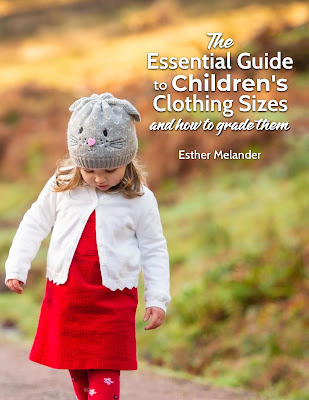
I am excited to announce my new book, The Essential Guide to Children's Clothing Sizes and How to Grade Them. This book explains children's clothing sizes in the United States, how they came about, and what sizes are used today. This book includes many things that have never been included in books on children's clothing design in the past.

  • A break down and explanation of children's clothing sizes from Preemie to size 16, including boys sizes.
  • A brief overview of difficulties in the industry, including obesity, and sleepwear
  • An explanation of how create your own grade rules.
  • Step-by-step instructions on how to grade basic styles, including grade rule charts.
  • Body measurement charts for infants to size 14, including slim and plus sizes for older children.
  • The infant measurement chart includes head circumference, neck circumference, hand length and width, foot length and width -- measurements that are hard to find.
  • Extra grade rule charts that include Newborn and size 9 months.
  • CAD grade rule charts
  • Complete measurement studies with additional body measurements, grade rules and references for infants, toddlers, 4-6x, girls (7-14), boys, and young men.
I will be doing a series over the coming weeks highlighting the above list with sneak peaks at what is in the book. This book is essential for anyone that designs and manufactures children's clothing. The book is currently available for purchase on Amazon or as an ebook on Payhip.

February 17, 2020

Who manufactures a size 9 months for baby clothes?


Infant clothing on a clothesline

I have been intensely working on a project that requires me to study measurement charts and grading charts for children's clothing. It is not the most exciting thing to analyze, I must admit. There has been one size that has been the most difficult to understand and that is the size 9 months for babies.

Traditionally, there never was a size 9 months. The infant size range was arranged:

3M - 6M - 12M - 18M - 24M - 36M

Over time that arrangement dropped the 36M, making the 12M the middle size for sampling and grading. At some point a NB (newborn) and 9M was added. I have not found the reasoning for the additional sizes or exactly when they were added. At least with the NB, it makes some common sense as it is clothing for newly born children. Babies very quickly move through these early infant sizes, so many times the clothes are simple t-shirts and bodysuits. Size 9M, from a measurement standpoint, appears to be a half-size. Something between the 6M and 12M. You could say the 9M should fit a 9 month old baby and perhaps that is the intent.

The problem comes with how to incorporate the size 9M into a normal infant size range offering. It throws off the middle size 12M in sampling and grading. With the addition of the 9M, the 9M becomes the middle size.

NB - 3M - 6M - 9M - 12M - 18M - 24M

No one samples in a size 9M. No one. In fact, it would make grading difficult to do so - just look at the traditional grading charts by Jack Handford.

And that left me wondering. How many brands actually produce a size 9M? While my quick survey is not scientific, it revealed some interesting points.

Manufacturers of sleepwear, t-shirts, bodysuits, or lounge wear, tend to produce only certain sizes and they tend to arrange them:

0-3M, 3-6M, 6-9M

Of course there are variations. Manufacturers of special occasion dresses tend to produce only a few sizes too.

12M - 18M - 24M

There are variations there too. When I worked for a brand that produced christening apparel, we produced all the sizes from NB - 24M. Size 9M was not one of our top selling sizes.

BabyGap does not produce size 9M for any of their styles. They stick to the traditional size range:

3M - 6M - 12M - 18M - 24M

But they arrange their sizes so it looks like they have their bases covered.

Up to 7lb (NB),  0-3M, 3-6M, 6M-12M, 12M-18M, 18M-24M

So what is the point of all this? When you are developing your children's clothing line, you do not need to produce every size. There is a great temptation to offer every style in every size. The reality is that if the big brands aren't doing it, neither do you. A lot depends on the style and your customer. Who do you hang with? Who is your competition? What sizes do they produce? Once you know the answers to those questions, you can focus your efforts.

What about the size 9M? Unless your customer requires that size, it is probably best to skip it or at least make it appear that it is included within a size label like 6M-12M. Some private label programs may require a size 9M. If that is the case, it is a simple matter to split the grade rule between a 6M and a 12M to add the size.

January 22, 2020

Do professional Fashion Designers use Adobe Illustrator?

Drawing tablet for graphic design

In order to be considered a professional in some occupations, you must demonstrate mastery of certain tools. A good example would be a doctor's stethoscope which demonstrates experience and knowledge in their profession. In the fashion business you will see many job postings requiring experience with Adobe Illustrator and Photoshop among other requirements. Does knowing these two software programs really demonstrate the knowledge and experience of a fashion designer (or any type of designer really), and thus their professionalism?

Design School


Design school usually includes training for Adobe Illustrator and Photoshop. This is because many designers of all types use these two software programs. It is expected that a fashion designer will need to know how to use graphic design tools in our current tech savvy world. Designing is a visual medium and being able to communicate through media is an important skill. This is especially true when working with overseas factories. Being able to demonstrate an idea with a drawing or photograph is sometimes the best and only way to communicate. A design student should definitely take advantage of this training. Designers who did not go to design school can find opportunities for learning from several platforms including Skillshare or Udemy.

Software Cost


Not long ago Adobe switched from outright license purchase to a subscription based model. There are different price tiers depending on which software and features needed. The monthly subscription fees are not entirely unreasonable, but it creates an ongoing financial commitment to using the software. This can present a financial barrier to a needed tool for some. There are advantages and disadvantages to this system, but keep in mind there are options out there. Illustrator and Photoshop also need computers with a certain level of memory and processing power to work well. That may be an additional cost.

Is it necessary?


Yes and no. Your job and responsibilities may not actually require use of Illustrator or Photoshop. Fashion designers are idea creators and often entrepreneurs. They may have some experience in a lot of areas but at the end of the day, some tasks are assigned to employees or outsourced to people with more focused skills. I have worked with a variety of designers over the years. You may be surprised to know that few fashion designers can draw or use Illustrator and Photoshop. I have seen some pretty poorly drawn ideas that later were translated into some very nice final products. Technical designers, artists, graphic designers or illustrators can create any artwork that might be needed. So while it may be nice to have access to Illustrator and Photoshop, it isn't absolutely necessary for fashion designers who are starting their own lines.

Options


While Illustrator and Photoshop are the two software applications mentioned most often, there are other options. The truth is there are other drawing and photo editing applications that can accomplish the same task at varying costs. The tool that you need is the tool that will do the job.

Procreate - an Adobe drawing program available for tablets
CorelDraw
Inkscape
Gimp

Among so many others.

Inkscape and Gimp


I have been in the fashion industry for a long time now and I only used Illustrator for a short time. I didn't like it at the time because the software was bloated with a lot of features I never used. It took a long time for the software to load and the extra tools and palettes got in the way. The current versions are much more streamlined and efficient. I also used CorelDraw, which worked well enough. In any event, as soon as I found Inkscape, I switched and haven't looked back. The same with Gimp over Photoshop. I have used Inkscape as a professional designer for at least 10 years and no one has been the wiser.

Illustrator will open and use Inkscape file formats (SVG) and vice versa for Illustrator (AI) files. Photoshop will open common image file formats like PNG and JPG. Gimp will open PSD files. Compatibility between different programs is so much better than it used to be. There are ways to provide Illustrator or Photoshop file formats if using Inkscape or Gimp. There are some workarounds including online file conversion sites that do a pretty good job.

Professionalism?


At the end of the day you can choose your tool of choice. If you prefer Illustrator, then that is your choice. Definitely take advantage of any training you can and test out all the different options. If your goal is to be an employee, then training on Illustrator and Photoshop may advantageous. If you are a freelancer or starting your own business, you can choose what works for you.

Professionalism is another matter. In my mind knowing specific software packages shows experience or knowledge, but it doesn't imply professionalism. Professionalism is to complete a task well, on time, and on budget. It includes good communication. The tool of choice is less relevant. What do you think? Please leave comments below.

January 06, 2020

Bullet Journaling in the New Year for Fashion Designers

Journal or planner

Like many, I have had my ups and downs with keeping a journal or planner. The New Year starts off with a lot of motivation which runs out in a few months. I have purchased or been given planners with pretty pre-printed calendars and spreads and I have gone months without using it. Sometimes those journals are hard to use because the pre-printed spreads do not fit my productivity style or they are to rigid in their approach. Other times the planners are too big and bulky to carry with me despite how beautiful they are designed. The Bullet Journal has been the method or style I have stuck with the longest. I have been bullet journaling for four years, which is a record. There are several things I like about this method.

Customization


You can do whatever you want with your bullet journal. If you browse Youtube, there are a lot of artists and people in the planner community who like to make pretty planners. They spend a lot of time illustrating and drawing out their planners. They love certain pens, pens with special ink and, of course, stickers. You can do this if you want but it does take a lot of time.

I am a bullet journal purist. I create lists and check things off. There is absolutely no need to decorate or illustrate your pages unless you want to do it. You can use any type of journal -- lined, dot, or grid. Discount stores, including Walmart, carry these types of journals and you can get started at a very low cost.

A catch-all place


I really like the idea of my bullet journal being a catch-all. I really dislike posting sticky notes on my desk and around my computer monitor. It's messy and cluttered. I also get sticky note blindness. I just don't see them because I focus on the task that is top of mind. So notes, reminders, phone numbers to add to my contacts list, all get added to the journal to deal with later.

I use my bullet journal for project planning. I create an outline of the idea with individual tasks for each step. As a task is completed, I flip back to the project page and check off each task. Sometimes the project idea tasks migrate across my daily to-do's, but I always have that original reference. This type of project planning is perfect for designers as they start a new season.

I use my bullet journal for note taking during meetings and conferences. No need to bring a separate notebook, it all goes in one place. Later, as I review my notes I can create new tasks based on areas of inspiration or goal setting. I attended a conference back in October and several work-related tasks evolved from my notes. It also helped reinforce ideas that I thought were important.

Bullet journaling as a Fashion Designer


You can use one bullet journal for both personal and work related tasks. It is easier to keep track of one journal versus two, but it would be easy to overwhelm your personal tasks with design work tasks. Designing a collection comes with making hundreds of decisions with dozens of things to keep track of at the same time.

If you are a freelancer or employee, I do recommend keeping a work journal. It's important to keep track of client work and what is accomplished so you can determine your billable hours. It also adds a layer of protection so you can prove what you did. You can keep this journal in the style of a bullet journal or however you choose.

If you own a fashion business, a bullet journal can absolutely help keep you on track to meet deadlines. A work journal that is separate from a personal journal will help keep the two things separate so that neither space is overwhelmed. I keep my work journal at work so I am unable to look at it home. This sets a healthy boundary so that I truly get a break. I do carry my personal bullet journal with me most places so that anything truly important can be recorded. For truly in the middle of the night work or design ideas, I send a simple email to myself that I will read in the morning.

Either way, you can figure out a method that works best for you. One or two journals, personal and/or work related. The system is flexible enough to experiment until you find the method that is the most useful.

Productivity hacks


A bullet journal is definitely an analog approach to planning and organizing. This method helps me to mentally retain my tasks and ideas for far longer by physically writing them down. It gives me mental space and breathing room by brain dumping tasks and ideas onto paper so that the stress of having to remember it is removed

A bullet journal can be combined with digital calendaring, reminders, and contact lists. The method is flexible enough that you do not have to feel like you are doing double work. If you like to setup a calendar with reminders, then you can certainly do it. Planning out on paper first can help with laying things out digitally. You can use productivity tools like Asana or Monday.com and still use a bullet journal. As project tasks were assigned to me in Asana, they were transferred to my bullet journal. A journal seemed easier to refer back to whereas the digital tools were helpful for future reminders. Either way, you can incorporate both ideas or methods.

The productivity hack that I have recently implemented is to create your to-do lists at the end of the day in preparation for the next day. I always had this vision that I would wake up early and have time to myself to plan my day and do a bit of reading. With my chronic fatigue and busy days, it never happened. I could never remember from one day to the next what tasks needed to be done. So now I spend maybe 15 minutes in the evening reviewing my tasks and creating tomorrow's to-do list. The next morning a simple review of my to-do list gets me started in the right direction.


If you are interested in learning more about bullet journaling, you can read about the Bullet Journal Method by Ryder Carroll. There are also lots of journals available on Amazon including fineliner pens.

December 30, 2019

Transitioning your focus as a fashion designer

The fashion industry is full of possible design opportunities and career tracks. If you are dealing with burnout as a fashion designer, there are alternatives. December is a great time to reflect back on the past year and evaluate successes and failures. It is also a time to evaluate if you are happy in your current position. Does your work energize you and make it easy to get up in the morning or do you have to drag yourself to work? If you dread going to work, then it may be time to plan a transition. As a new year approaches, looking forward to something new can help bring new energy and hope for a bright future.

As a fashion designer there is a way to transition your focus on the things you really want to accomplish. But changing your focus as a fashion designer can be challenging. Designers are attached to their brands and it can become a part of their identity. Letting things go so you can try something new is a bit scary. Though once the decision is made, you can take one step at a time to reach a happier place.


 Evaluate your goals


Writing down your goals

If you have made the decision to transition, it is time to evaluate your goals. Goals can be super specific or more general. Do you want to own and produce your own brand? Do you have financial goals? Do you want to change product categories? It helps to write your goals and vision down. If you start more generally, you can drill down to specific steps. Smaller specific steps leading to your goal are more actionable.

Goals can change over time so it is perfectly fine to cross off or toss goals that are no longer a part of your vision. Goals do not have to be a rigid framework that do not allow for deviation. Life is not like that and changes in life require changes in your goals. As a designer, I have had to make changes in my professional goals as life has happened. This is normal, so allow flexibility in your decision making and goal setting.


Choosing a new focus area


Blurry clothing rack


Fashion designers can design many product categories from shoes and accessories to all types of clothing. Usually a designer specializes in one product category and becomes known for one type of work. This can make a designer feel trapped because they feel like they can only design one thing. Large design houses will design and produce an entire look from head to toe. Smaller design entrepreneurs are not financially able to do the same thing and so they produce they same type of product from one season to the next.

If you own your own business, look at adding a new, but related, product category. For example, a children's clothing designer that creates sleepwear could explore playwear or bedding. Adding that new product category can reinvigorate your motivation and provide a challenge that holds your attention.

As an employee, you could begin working on your own design ideas on the side. Begin to turn your ideas and dreams into an actual product. Draft the patterns and sew up a sample. Work on it until you are satisfied.

Evaluate and sharpen your skills


Regardless of your current position, you can begin to explore related career tracks in the fashion industry. Begin by listing all of your skills. Today's fashion designer has skills in many areas. Here are just a few ideas:

  • Graphic design
  • Artist drawing or painting
  • Social media marketing
  • Adobe Illustrator and Photoshop
  • Sewing
  • Patternmaking
  • Spreadsheets
  • Training/Coaching
  • Sourcing/Outsourcing
  • Product development

Each of the above skills can be used in other employment or freelance. Perhaps you no longer want to create and sell a product or run a business. You could start a consulting business for other designers helping them develop their product. Perhaps you love sourcing materials. You could help other designers find the right fabrics and trims. Or perhaps you love to draw. You could provide freelance drawing services to other designers who can not draw (you would be surprised at how many can't draw). I have a friend that creates drawings of client's wedding dresses as a keepsake.

Perhaps there is an area that you want to improve. Now is the time to sharpen those skills. Take an online class in search engine optimization or social media marketing. Improve your drawing skills by starting a daily drawing practice. Create a portfolio of your work. Create an outline for a training class.


Hire Help


Many fashion designers also run their own companies, bootstrapping as they go. Eventually you reach a point where you need help. The stresses of running a business while also being the creative leader can be overwhelming. At the same time, hiring an employee costs money. If you can't hire an employee to work with you at your office or design studio, look at hiring a virtual assistant. Either way you can outsource or delegate the tasks that you dread doing. If you need or want time to focus on the more creative aspects of your business, then get someone else to handle the more mundane tasks. There are plenty of people that can make phone calls and research sourcing options. A virtual assistant can lessen the financial impact of a regular assistant and still accomplish the small tasks you may not want to deal with on a daily basis.

If you are an employee looking to transition, and have the means to do so, you can still hire an assistant. A virtual assistant can take care of the tasks you can't accomplish during the day when you are at work and help you move things along.


Transitioning your focus to something new


Sometimes it is necessary to make drastic changes. This may mean shutting down a business, switching career tracks, finding new employment, or maybe even starting a new business. If you are in this situation, there are things you can do to help ease the transition.

Before making the leap to something else, have an emergency fund. Prepare financially by building your cash reserves so you can still eat and pay rent. Having to worry about daily living essentials can cause you to abandon your dream and force you to take the next available opportunity even if it does not match your goals. If you are transitioning to freelance work, a fund will greatly improve your chances of success.


Try to have a plan in place with actionable steps. If you quit what you are doing now with no plan, it will take you even longer to transition. Let's say you want to become a coach to other designers. Here is what your plan may look like:

  1. Start an educational blog
  2. Collect email addresses of possible clients
  3. Email potential clients introducing yourself
  4. Create a proposal and determine rates


I've spent the last year or so on my own transition. I've worked as a patternmaker, technical designer and designer for over 20 years specializing in children's special occasion clothing. There are many things I enjoyed about my work. I loved working with expensive fabrics and trims to create something beautiful for a special event that would be kept as an heirloom or memory. Still, I made basically the same product over and over again with minor variation. Creatively, I became bored. At the same time I was battling chronic fatigue and I was being forced to evaluate my current work load. Since then I have evaluated my skills and found a new related focus that has me energized and is bringing me back to the business one step at a time.

December 07, 2019

Battling Burnout in the Fashion Industry

Battling burnout


There has been a lot of discussion among fashion industry types of burnout. With many years in the fashion industry, I can confirm burnout is a real experience. I designed or worked on the same basic product for nearly 20 years. I reached a point in which there was not much left in the well to draw from creatively. It was at my least creative moments that I did some of my best work because my employer threw me some projects that kept me motivated. After that opportunity closed, I just did not have it in me to go after freelancing jobs in the same market segment. I was burned out.

Designers new to the business quickly burn out for various reasons. Fashion production has a much smaller time scale than in years past. Producing three to four new lines a year is extremely difficult. There are fast turn times on samples and sourcing. The sales cycles are short. Designers are under constant pressure to produce something new, fresh, exciting and on budget. This means long hours for days and weeks on end.

Some trade groups have taken notice and start to advocate for better pay and hours. I don't know if anything will change, but these are some of the things I did to help battle burnout.

Schedule time off


This may be difficult depending on your job situation. But we all need time away from the grind. I had at least one day off a week to focus on other things. Attending church and focusing on family provided a weekly boost that kept me going. Plan vacations. The point is to be intentional with your time off and do something else other than work.

Turn off social media


Social Media

It is tempting to troll Pinterest or Instagram for new ideas all the time. Facebook, Twitter, and any other social media platform can bombard you and your mental health with unrealistic expectations. It is as true in the fashion industry as anywhere, but there is an expectation to stay on top of trends by following trendsetters. Designers not only have to create a new look, they are expected to also live it. Save your mental health by not looking at social media outside of work time or responsibilities so you can be yourself.

Explore new hobbies or interests


Oil painting

As a designer, many of my hobbies and interests were related to my occupation. This meant I was surrounded by work related supplies and tools at work and at home. Try to find a hobby that is different to help re-energize you mentally and physically.

Take care of yourself


Take care of your self by getting some sleep


One of the primary causes of burnout is a lack of rest, either mentally or physically. There are only so many 12 hour days you can do before you just don't perform well on the job or at home. Prioritize sleep, healthy eating, and exercise. If there are health issues, then address them. If these things are allowed to persist, your job performance and over-all well-being will suffer. This can be difficult in certain job situations, but do the best you can.

Learn to say no


If you are a freelancer there are some things you can do to improve high pressure situations. The first is to have clear policies about job completion and deadlines. This means you can add a few extra days for job completion even if you don't necessarily need it. The client may pressure you for fast deadlines, but if you can't meet the deadline or don't want to, you can decline the job. It's better to be honest up front about the work you can and cannot do so that the pressure to complete is balanced with reality.

This is more difficult as an employee but sometimes employers have unrealistic expectations. If it is impossible to complete a project on time, do your best to communicate with your employer. Try to have a plan or new timeline for project completion. This may mean asking for help from other employees. I once had an impossible deadline and after I explained the situation to my employer, he generously gave me more time. He just didn't know the work involved.

Start a side hustle, plan a transition or exit


Plan transitions


We can put a lot of pressure on ourselves to perform when we feel like we don't have a choice. This is why I always suggest having a side hustle or plan in place in case of a layoff or exit. A choice frees us to make a job transition if the current situation becomes intolerable. Knowing we can do something else without meeting financial ruin can relieve a lot of stress. A side hustle does not have to take much of our time as long as you have a smart plan in place. It could be something as small as monetizing a blog or creating some small gigs on Fiverr.

Job transitions and layoffs happen frequently in the fashion industry. Have a plan in place with where you might go or do next if this happens. This may include having an emergency fund to pay rent while you sort things out and paying off debt.

November 11, 2019

Follow-up on free motion quilting on a Singer Rocketeer

After leaving this project sitting for months, I could not convince myself to actually use my Singer 503A to machine quilt one of my quilts.

Results of free motion quilting on a Singer 503A

None of my samples were really satisfactory. The effort to push this small sample under the foot in an all-over swirl pattern was much more work than it should be. I actually had to push and pull the sample with some effort, which is not normal. I had a hard time visualizing myself doing this for a queen size quilt. With a proper foot or machine, it would be easier and probably fun.

So the decision is made and I will likely be hand quilting my Hawaiian quilt instead. I used safety pins to baste it together.

Basted Hawaiian quilt ready for quilting


As an alternative, I also purchased a walking foot attachment. This attachment actually works well. It does have a cheap feel, so I'm not sure about long term durability. If I choose to quilt in straight lines, then, this is a possibility I may use this attachment on my next quilt.

Singer slant walking foot attachment

*Amazon links are affiliate links.

February 11, 2019

Frequently Asked Questions about Tech Packs

With the release of my Tech Pack, there are a lot of questions on how to use it.

Q: Is there an industry standard for Tech Packs?


No, but there is industry expected information. There are several tech pack templates and forms available for purchase on the Internet, and they are all a bit different in presentation. Generally, those tech packs seek the same information. A Tech Pack contains any and all information needed to manufacture your product. This information includes a cover page, technical drawings, cutting specs, labels, etc. The forms included in my Tech Pack allow for a lot of flexibility so it doesn't matter if you are manufacturing clothing, bags or tents.

Q: Does a Tech Pack include a cutting spec?


I have seen some statements that imply a cutting spec is usually not included in a tech pack. That has not been my experience. If a cutting spec is needed to make your product, then it should be included in a tech pack.

Q: What forms do I send to a contractor?


Only the forms that are needed for the work contracted. It is possible to hire a contractor that can do everything from product development to cutting, sewing, finishing and shipping. Usually, a sewing contractor is hired to do cutting and sewing. In that case they only need a cover sheet, style sheet/cutting spec, bill of materials, colorways (if needed), labels, swatches, and anything else needed to complete the work. Forms that contain proprietary info are for your own in-house use, such as a cost analysis.

Q: What is the difference between a Cost Analysis and a Bill of Materials?


A Bill of Materials contains a list of every input (fabric, trim, supplies) needed to manufacture your product. It does not contain pricing. This form can be used for ordering and inventory.

A Cost Analysis also contains a list of every input but also includes pricing and quantity. This form is used to figure the cost of manufacturing, sale price, and gross profit. This information is kept confidential.

Q: What else should my Tech Pack include?


A tech pack is usually just the paper work involved in product development. But if you are sending a tech pack to a sewing contractor, you should include a perfectly sewn sample and fabric and trim swatches. This is especially important if you are manufacturing overseas where there may be a language barrier. The sample will help clarify what you want when the contractor may not understand or read the tech pack. Swatches are also helpful if the contractor is also buying materials overseas.

Q: I don't draw well, do I have to include technical drawings?


Any drawing is better than no drawing. It is the primary way you will communicate with a technical designer and/or pattern maker. You can also hire people to create the drawings for you at reasonable cost.

Q: Can I customize The Simple Tech Pack?


Yes. Included in your purchase is a spreadsheet workbook version (Excel and LibreOffice Calc). You can add your company info and logo. You can also rearrange, rename information if you choose. The only caveat is that the forms are copyrighted and cannot be resold.

Q: I'm an indie pattern designer. Will this tech pack help me?


Yes. An indie pattern designer is very similar to a fashion designer. You will still need to develop a style, cutting spec, measurements, sewing instructions and grade rules. The cost analysis will help you price your product. The Simple Tech Pack can help you organize the information needed for your final product.

Q: Why does your Tech Pack have a Style Sheet instead of a simple cutting spec?


I created a combination form called a Style Sheet. This form contains both a technical drawing and a cutting spec. I have found it very useful in product development to include a technical drawing with the cutting spec as it travels through sampling. That way every person along the way has the same point of reference. It reduces both paperwork and questions.


Do you have any other questions? Please leave a comment and I'll answer your question in an upcoming blog post.

February 04, 2019

New! A Simple Tech Pack

A Simple Tech Pack

I am excited to announce that I have released a Tech Pack available for purchase in my Etsy Shop!


There are many versions of tech packs on the internet. I call my version A Simple Tech Pack because I have identified the most essential pieces of information needed. My forms have simple clean lines without much visual clutter. These forms will help you gather all of the needed information to manufacture your product. Included is an instructional guide on how to fill out each form. There are three versions provided – PDF, LibreOffice Calc, and Excel. In the spreadsheet workbook version, you can modify, expand, and otherwise customize these forms.

This tech pack will help you organize and present industry expected information needed to manufacture your product. There is no industry standard version of a tech pack, just the information required. I have used a version of these forms for the last 20 years either in-house or as a package sent overseas to contractors. With the included how-to guide, there is no need to track down extra videos or tutorials. This tech pack is perfect for fashion designers, design entrepreneurs, or anyone developing a sewn product.

A Simple Tech Pack forms


Forms included in the Simple Tech Pack:

Cover Sheet
Style Sheet/Cutting Spec
Details
Cost Analysis
Bill of Materials
Colorways
Finished Pattern Measurements
Finished Pattern Measurement Drawings
Grade Rules
Grade Rules Blank
Labels
Sewing Instructions
Fabric Swatches
Trim Swatches
Blank Swatches

Bonus!
Wash Testing Guide and Form

No physical product will be shipped. You will receive 3 digital files in a zipped folder. After downloading the folder, you will need to extract the files – most computers have this option available, look for the word “extract” after double clicking on the folder.

There are no refunds on digital sales. Please contact me if you have any questions or concerns. I will do my best to help you.

In full disclosure, some of these forms are also found in my book The Organized Fashion Designer. I did not see the need to create something new when it already existed in the form needed. In addition I have added several forms not included with the book, including a bonus form for wash testing. With your purchase, you will receive these forms as a spreadsheet workbook and a PDF. You can fill out the forms in Excel, OpenOffice/LibreOffice, or by hand. Which ever way you prefer. For complete organization of your studio, you can purchase both products to compliment each other. The Organized Fashion Designer is available for purchase on Etsy, Amazon, and Lulu.com.


January 07, 2019

Free motion quilting on a Singer 503a Rocketeer

**This tutorial is a work in progress and will be updated as I practice more.

After finishing up the piecing of the Patches and Pinwheels quilt, I began debating on how to quilt it. Do I quilt it myself on my Singer Rocketeer? Do I handquilt? Do I pay someone to do it for me? I am still debating on this quilt because it is so big but I do have my smaller Hawaiian quilt that I may try.

I did buy an aftermarket free motion/embroidery foot from Amazon. The Singer Rocketeer has a slant shank and there are two versions of a free motion foot. The first is a spring design and the second use a curved piece of metal as the spring. The second version has technically been discontinued but you can pick it up on ebay. The spring design is available from various sources.

Free motion quilting foot on a Singer 503A

Free motion quilting foot on a Singer 503A

This version is made by Honeysew and is available on Amazon for about $9.00. My understanding is that as the needle bar moves, the bar at the top of the spring lifts the foot so it hops as you sew. Having never used something like this, I don't know if that is true. In this case that little bar is at least a 1/2" above the needle bar and does not ever touch. In other words, it doesn't work the way I think it is supposed to work.

I had to refer to the machine manual and Amazon review comments to figure out how to make this work. The interesting thing about this Singer and many older models is that the instructions for free motion embroidery and darning instruct you to remove the presser foot and use a bare needle!

Singer 503 manual on Darning

This setup requires the use of a hoop, which is not practical for a quilt. Also, it exposes your fingers to the needle much more easily if you are not paying attention! So after a bit of trial and error, I eventually figured out the best setup. The manual has instruction on a few different pages, so I missed a few key steps at first.

1. Set the pressure to the "D" setting. This dial is on the inside of the machine and the "D" and is for Darning. This setting removes all pressure off the foot. This will allow you to move the fabric under the needle.

The D or Darning setting on a Singer 503 Rocketeer

2. Lift the feed dog plate.

Lift the feed dog plate for darning on a Singer 503A

3. Tension settings may need to be adjusted. I loosened it a bit only to turn it back to my normal setting. This may depend on your machine, thread, etc.

4. Bring the bobbin thread to the top and sew a little slower at first. It will take practice to determine the ideal speed for you. Also, I ended up wearing garden gloves with that nylon coating to help move the fabric under the needle.

My initial results are not pretty, but I think with a bit more practice I may be able to do free motion quilting on this machine.

Free motion quilting on a Singer 503 Rocketeer

If you have done free motion quilting on your sewing machine, please leave a comment on what machine you used and how it went.

*Links to Amazon are affiliate links.

January 01, 2019

Patches and Pinwheels pt. 4

I love making serious progress on a long term project on New Year's Eve and Day. This year is no exception. I have finished the piecing and borders on the Patches and Pinwheels quilt. (More pictures will come after the quilting is finished). The quilt measures about 96 x 96 inches.

Patches and pinwheels quilt top

I had enough yardage of the green border fabric to also use it for the backing. If I were to buy "quilt" shop quality fabric, the backing alone would have been at least $100. I did not spend anywhere near that amount. The green fabric was left over from a purchase made several years ago and I can't remember what I paid for it. I'm glad I found a project for it because the fabric had been sitting all those years. The majority of the fabrics for the pieced blocks came from DH's shirts that were worn through in the collars and cuffs, but still had good fabric in the body. I supplemented with a few shirts from the thrift store and a few white fat quarters. All told I spent about $15 for the fabric (plus whatever the green cost several years ago). All that's left is to buy a batting and then decide on the quilting. Do I pay someone to quilt it or do it myself? I am undecided there.

Which brings me to the cost of quilting fabric today. I know for many this is a fun hobby, but the cost of quilting fabric is just so crazy high right now. $12-$15/yard for fabric! I know there are some alternatives and I can shop sales, but yikes! This is why I have turned to the thrift store and scrappy quilts. I don't have a problem using clothing for quilting fabric. It's what our mothers and grandmothers did years ago out of necessity. Now, I wonder if it is wasteful just to toss our old clothes? Sure, some are suitable for donation (and I do donate a lot). But there are some things that could be useful for something like this. This quilt project has definitely made me look at thrift stores as a new source for supplies.

This is a Bonnie Hunter design. I chose to try one of Bonnie's designs to better understand her process. I think she designs quilts in two different ways. I do think many of her designs are created using eQuilter. While she does incorporate scraps into her designs, the overall visual affect can only be achieved by using a design tool like eQuilter (She has dropped hints that she does use the software). Her method of using standard piece sizes also makes a difference in efficiency and utilization of both time and fabric. Other quilt designs are a bit more freeform. In other words, she doesn't start in eQuilter, but rather puts pieces together (such as leader and ender piecing) that eventually are put together into blocks and then quilts. Because she uses standard sizes, everything eventually finds its way into a finished quilt top. It is a very smart way of utilizing scraps.

This design is one of Bonnie's free quilt patterns at her website. The instructions are more of a tutorial without specific piece counts and yardage requirements. I think it could be a bit of challenge for a beginner. The small piece sizes and precision sewing is also a challenge. I had a fair bit of fixing to do because of either cutting and/or sewing errors. The patterns published on Bonnie's website, while I know they are free, could use a bit of editing. I do appreciate the effort and work it takes to put something like this together. I wonder if her published books/patterns are more polished. She does take her mystery projects down and provides them for sale after the mystery is over. I hope the "sale" versions are better edited and presented over the free-form versions given on the website.

I don't know if I will make another Bonnie Hunter quilt. I am pleased with how this quilt came out and I am glad I made it. Now that I understand the process, I think I can design my own scrappy quilts. That should be a fun challenge.

December 17, 2018

A question on the drawstring rule and children's clothing

I received a question about drawstrings* and elastic waists.
I want to design skirts with elastic waists and a ties that are sewn in by the hem, which then connect to a bow. Is this not acceptable to the Drawstring rule CPSIA? So confused on this. If isn't acceptable, can I do a skirt with elastic waists and sew a bow in the middle?
In the United States there is a safety rule about drawstrings on children's upper outerwear.** This rule does not allow drawstrings in hoods or waists of jackets or hoodies, for example. A drawstring is a cord with or without a toggle that is inserted in a channel. The intent of a drawstring is to cinch up a waist or hood opening to make it smaller. This rule was enacted because children have died when the toggle or knot on the drawstring became entangled on playground equipment and bus doors. It appears the CPSC has added a bit of clarity to the original rule. You actually can have drawstrings so long as the drawstring does not extend more than three inches and has been securely stitched through in the middle of the channel so it cannot be pulled out.

The drawstring rule for children's safety
This hoodie uses ribbing to help it fit closer around the head, instead of a drawstring.

But if I were you, I would avoid using drawstrings altogether in children's clothing. The reason is rather simple. There continue to be drawstring recalls even with almost no reports of injury or death. As of 2012, there have been more than 130 recalls involving drawstrings. The most recent is of a rain poncho. In this example it's clear there are no toggles or knots on the drawstring, the string is just too long (no reports of injury). The rule covers children 2T-16, but there have been recalls on infant clothing too. There was an odd recall of an elastic waist belt on a jacket (no injuries).

The recent rule revision appears to focus almost entirely on upper outerwear like jackets, sweaters, and hoodies. But historically there have been recalls on pants with drawstring waists. For this reason, I do not recommend drawstrings on any children's clothing. The risk is too great. Even though the majority of the recalls in the last 10 years have had no injuries or death, there have been a few. Also, the CPSC seems to inconsistently apply the rule, including the apparent exception of a three inch extension. There is just no way to predict what might happen.

To answer the first question above, I would try to avoid sewing things onto the ends of ties. That seems to fall into the drawstring with toggles or knots category. I think a bow sewn securely through on top of an elastic waist should be ok.

Waist ties and belts have not been involved in any product recalls, as far as I know, and are not included in this rule. Girls dresses, in particular, frequently have waist ties or belts. Even though the rule excludes this type of application, I would still exercise caution. Waist ties should only be long enough to tie with tails that are not too long. The tail of a belt or waist tie should not extend below the hem of a dress or touch the floor - it could become a trip hazard. Also, be sure there are no knots or toggles on the ends.

BTW, there is an ASTM standard for drawstrings, ASTM F1816. It costs $42 to buy a copy of this rule.

*I'm not a lawyer. The statements above are my opinion and should not be construed as legal advice on how to comply with government regulations. If you are manufacturing children's products, you should seek legal advice, follow all applicable rules, and seek out a certified testing laboratory as required.

**The CPSC has updated their website since I last visited and they have made it even more difficult to find safety rules with their "robot regulator". You have to jump through a questionnaire to find the safety rule you are looking for. This is the direct link to the drawstring rule, however long it remains a valid link.

December 10, 2018

Home sewing patterns for newborns


I received this question about commercial sewing patterns:
Supposedly the XXS size on commercial patterns (McCalls, Simplicity, Butterick) is supposed to be for babies 7 lbs or less, but they swallow newborns up. If you read around the Internet, there are lots of frustrated grandmothers and mothers-to-be that want to sew for their new or expected baby, but can't find a pattern that will fit. I read that doll clothing patterns don't work because the neck is wrong for a human infant. I tried buying vintage layette patterns from Etsy and they were just as bad. I want to know how to downsize a commercial XXS dress or romper pattern so it fits a NEW 7-8 lb baby. I am sick of gowns and knit sleepers. - Pam
It has been a long time since I have sewn children's clothing from commercial sewing patterns. What I do remember is they are big. Too big. The proportions are bit off too. I don't know why either. Those companies have their own pattern blocks and I suspect they have not really updated or checked them in a long time.

Design school does not spend all that much time on children's clothing. I know there are few pattern making manuals that really get the sizing right, though sizing (exact measurements) is less of an issue than you might think. Regardless of where you start, you will have to make adjustments for fit. Only one manual even addresses infant clothing, and that book is Metric Pattern Cutting for Children's Wear and Babywear by Winifred Aldrich. I have a previous edition, but it covers most of what you might need. For Americans, the book is in metric. I didn't really have a problem drafting basic blocks using metric. You just need a metric ruler, though I did convert back and forth to see if I was on target. But even after drafting your basic blocks, you will need to make adjustments to the pattern until you get the fit you want. I have learned quite a bit by trial and error over many years.


For the home sewist, this is probably not all that practical. There is not really an easy way to size down a home sewing pattern that already has proportion issues (even Burda, which I prefer over the others). The biggest problem with some of the sewing patterns are tops are too wide, pant legs are too short just as examples. You could begin by folding out some of the width. But I can't say how much as it would probably depend on the style and desired size. In other words, no matter what, there will be a bit of back and forth. I guess my advice would be don't be afraid to experiment. Measure your baby and the sewing pattern and reduce width and length as needed. It is a bit of a challenge to measure a baby, but it really is the only way to arrive at your end goal. I wish there was some other way. Perhaps there are some indie sewing patterns for newborns? Please leave suggestions if you know of any.

December 03, 2018

Knitting : Ragg Socks


I recently finished up a new pair of socks. The yarn was gifted to me and it was fun to knit with. The yarn is Trekking (XXL) in colorway 100. I love Trekking sock yarn but I have had a hard time finding it near me. One 100 gm ball has generous yardage that may be enough for a pair of men's socks. I had yarn left over that will migrate to some scrap yarn socks at some point. With this color way, do not expect to be able to knit symmetrical socks. The color changes are random throughout the whole ball. With this yarn it is fun to watch the color changes as you knit. You can see how each sock came out below. Some comments on Ravelry has a few negative comments about this yarn brand, but I found this colorway to be soft, with no knots or tangles.


I knit my usual vanilla socks using the basic sock pattern from Ann Budd in the Knitter's Handy Book of Patterns. I have knit a few things using this book and it is a worthwhile investment. Another nice thing about Ann Budd is she is on Ravelry. If you link your socks to her pattern, she will leave a nice comment. I believe she looks at any project made from one of her patterns.

November 19, 2018

Book Review: Mending Matters


Mending Matters by Katrina Rodabaugh is a visually beautiful book. There is full color photography on every page. The pages are thick and glossy with a sewn binding in a hardcover book. The layout and graphic design work is really well done. Those qualities alone may justify the price.

Mending Matters is a book with two blended parts. The first part contains essays on Rodabaugh's journey to Slow Fashion. She explains what Slow Fashion is and the values that are important to the movement. There are also essays from other bloggers involved in the movement. The second part involves tutorials on mending with step-by-step photography for each project.

I have mixed opinions on this book. The first involves the discussion on Slow Fashion. Like the traditional food crowd, there are certain values involved with the consumption of clothing and textiles. There are words like sustainability, ethics, social justice, and activism used throughout. I almost felt brow-beaten by the philosophy. For Rodabaugh, Slow Fashion means buying and wearing only biodegradable fibers like cotton and linen. It means rejecting Fast Fashion trends completely and wearing clothing until there is no hope of repairing it. It means buying only clothing at a thrift store and using fabric dyes made from plants. There are a lot of little decisions one must make in order to be a part of the Slow Fashion movement. My first introduction to Slow Fashion was the Alabama Chanin trend, which has many beautiful examples. Rodabaugh's book goes a step further.


But even the author concedes that as you become more aware and educated about how clothing and textiles are produced, you will likely have to compromise on the very values you proclaim. This is because the entire production cycle from fiber to fabric to clothing to retail involves some process that may harm the environment or conflict with some other value. As an example, Rodabaugh wears linen because it is a biodegradable fiber. But the process in creating that linen fiber involves manual labor in foreign countries that do not necessarily pay what we would consider fair wages, followed by bleaching, dying, and transportation across long distances.

But as I have trouble with the Slow Fashion movement, I am actually participating. For me it is less about a political statement or personal philosophy. Granted, I think that we should work to find safer ways to grow and process fibers and find ways to reduce waste. Those are good things. My participation is more about thriftiness and economy. As I read this book, I realized that a majority of my wardrobe comes from the thrift store. There are, of course, certain things I can't buy at a thrift store, and those are purchased new, but on discount. I also repair and mend as needed and up-cycle what I can. Everything else goes back to the thrift store at some point. I never put a label on those activities because it was something that I naturally did.

The second part of the book contains tutorials on how to mend. The tutorials themselves are rather simple projects. Many similar projects can be found through online tutorials from various places. Rodabaugh does have a certain aesthetic and it really shines in the photography. Her mending uses sashiko stitching to elevate a mend or patch to something artistic. Sashiko thread is a cotton thread with long cotton staples and is known for its smooth, lustrous quality. Pearl cotton thread is a bit more economical, comes in many colors, and is pretty much the same thing. Sashiko stitching is precise stitching in a repeated pattern. Rodabaugh relaxes her stitching, though there are many beautiful examples of true Sashiko stitching online that you could follow if you choose.


In the past mending was meant to be invisible, if possible. In this case, it is meant to be a focal point. Some of the projects, such as the bags, lack practicality and would likely not hold up to heavy use. Hand stitching with large stitches lack strength. But, for some things it is probably fine. Below is a link to my pinterest board with more mending ideas.


As I said, I have mixed feelings. It is a beautiful book, no doubt. The projects are inspiring in their aesthetic appeal. It is making me rethink a few mending projects of my own. But is the book as a whole worth the cost? I'm not sure. What are your thoughts on the Slow Fashion movement?

*I am an Amazon affiliate and any links to Amazon are affiliate links.

November 12, 2018

The Singer Hemstitcher 72w19 - Questions and Answers

Singer Hemstitcher 72w-19

I sold my hemstitcher. It took almost a year once I decided it was time. I was not getting enough work to justify the space anymore. At the same time, I wasn't enjoying the work that I did get because I just didn't have the energy. I did love this machine and it was very difficult to let it go. Luckily, I think the person who bought this was very excited and happy about acquiring the machine.

Over the years, I have received a lot of questions about this machine. My previous blog entry on this machine is one of my most popular entries. I was supposed to get notifications anytime someone reached out to me through my Contact page. It didn't work and I didn't think to check until recently. So, in one grand finale for the hemstitcher, I'll try to answer those questions.

Repairs

I have a Singer 72W19 and I'm trying to find someone in the southeast that works on them. Do you know of anyone?

I would appreciate knowing the names for the 3 people in Utah that service Hemstitching machines. I have a hemstitching machine that I inherited from my husbands grandmother. It is a model No. 72w19 fitted with a motor. I think the timing is out as it doesn't seem to do what it's supposed to. Could you tell me who in Utah works on these old machines and how I can get in touch with them.

Could you share the contact info of person that showed you to care and maintain your hemstitcher. I have one but I can't find anyone to help me adjust and maintain the machine. Thank you so much.

The person I found to help me repair my machine many years ago was past retirement. He would be close to 90 years old now, if he is still alive. I'm grateful I found him because he taught me enough that I could adjust the machine myself. It took me calling every sewing machine repair person I could find asking them if they worked on these machines. Most repair people, technicians, or industrial sewing machine mechanics do not really know how to adjust these machines. Some will say they will try, but that always made me nervous. Incorrectly adjusted machines could cause damage to the machine. The timing on the machine has a lot of variables and each component has to be adjusted in order for it to work.

That said, I only know of one place that MIGHT work on these. Daines sold new versions of the hemstitcher. But, I will warn you that they may decline or charge you a lot of money. Your best bet is to get a copy of the manual and learn to adjust the machine yourself.

I recommend purchasing the manual and parts list. I believe I bought my copies on ebay or some other site that sold old manuals. Well worth the investment!

Specific Repairs

I cannot figure out how to replace my needle that broke. I can’t seem to fit it into the ‘slot’. Anyone who can walk me through it?!? Please!!

It is hard to provide advice on this because I can't see what you are doing. Perhaps the needle clamp screw needs to be loosened more?

I wanted to verify which screw on the instruction page to turn - is it the "S" screw? A friend said that I could mess up everything if I unscrewed the wrong one, and I am scared to try! I bought this machine a couple of months ago and it runs, but has a broken right needle. Thank you so much!

I'm not sure which screw is the "S" screw. There is a needle clamp screw facing toward the front near the top of the needle in the needle bar. If you could refer to a manual and/or parts list, you will find the correct screw.

That said, you will not mess everything up by loosening a screw. If something came out of adjustment by doing so, you will just have to work to put things back correctly. This is how I learned how to adjust the timing.

I have a Singer 72w19 and need to change the needles. First time for this. When looking at the front of the machine there are 2 sets of needles. Do I use the top set or the bottom set? I'm thinking the bottom set but when I loosen the screw the needle doesn't even budge. Any instruction on this would be appreciated. Thank you, Denise

There is only one set of needles and they look like regular sewing machine needles. Perhaps you are referring to the piercers? A look at the manual/parts list will help you identify what you are looking at.

Hi, I have a Singer 72w 19 hemstitch machine and I am having trouble with the thread breaking. I was stitching on it and suddenly the left needle broke for some unknown reason. I replaced both needles and now I'm having trouble with the thread breaking about every six inches of sewing.

This is a common problem with these machines, especially the left needle thread. I did not completely eliminate the problem with my machine, but I did minimize it. First, make sure the needles are entering the fabric correctly. Very minor adjustments there can make a big difference. It is possible the left needle is too close to the piercer and the piercer is cutting the thread. Or the left needle is not rotated to the right position. Next, be sure to oil all the moving parts on the front of the machine where metal touches metal. The needle bars and levers all need to be able to move freely. I would add a drop of oil on each of those parts before sewing. I also had a screw that would work itself loose on one of the levers and cause the needle to move out of adjustment. A drop of loctite eventually prevented the screw from coming loose from the machine vibration. Finally, use the best polyester thread you can find. In my case, a Gutermann polyester thread from a cone worked best.

I have seen on our classified ads that there is a hemstitcher head for sale for 500 dollars. I have an old industrial serger in a table that has been converted to house power. Here is my question: Do you think that I could swap out the serger for the hemstitcher?

Most likely no. The table tops are cut specifically for the machine. A hemstitcher will not fit in an industrial serger table. If you had the correct table top and stand, you could move the motor over provided you have the correct wheel size on the motor. Some motors have fly wheels that will cause the machine to run too fast.

Machine Parts

I need a complete needle and piercer holder for my hemstitcher. Do you have any of them? Please let me know what parts you have. Thank you.

Where do you purchase your needles for your hemstitch machine? I have two of them (one 1904 and one 1928), but I need to order needles. Can you help me out? Thank you, Marcia

I recently received a Singer 72-19 and need resources for supplies and how to use it. Suggestions? I live in Sandy, Utah

You can buy needles from an industrial sewing machine supply. Daines had needles at one time, but they charge a lot for shipping (it's not something they normally do and they don't really like to do it). For piercers, I ended up using google to find a source from China. Some industrial supplies or hardware store will have some of the screws. All other parts would have to come from a parts machine.

Machine Value

I have inherited Singer 72w-19 Hemsticher, W522308. I think it is from 1920. It has lots of needles and misc attachments. I am wondering if there is a market for it. it comes with a table. I would appreciate any info on it. Thank You. Jenny

Yes, there is some value if the machine is in good working order and comes with a table and motor. I have read there are attachments available for the machine, but I have never seen them. A good machine will go for a few thousand dollars, but I can't put an exact value on one. I was pretty firm on the price I asked for my machine and eventually got what I wanted. It did take me a while to sell it though

Machine Operation

How can I make the hemstitch go faster it is so slow thanks Linda Farnsworth.

It may seem as though the machine is too slow. Each rotation requires several things happening at once. First the pre-punch piercer punches the fabric and the fabric moves forward. The main piercer then enters the pre-punched hole along with the needles. The needles enter the same hole about three times. This process is longer than a regular sewing machine. Speeding up the machine with a different size pulley increases the likelihood of parts hitting each other or the throat plate and throwing everything off. It is essential the machine run slower because that is how it is designed.

Yahoo Group

Did you run the hemstitch Yahoo group? I hadn't checked on my groups lately and discovered it's gone...darn! I will admit to googling Esther + hemstitch machine and finding your lovely blog..... So even if you aren't the same Esther, I'm glad I found your blog anyway!

Yes, I ran a Yahoo Group for Hemstitchers for a while. At least a couple of years. It received almost no traffic and I just didn't have the time to continue it. I did ask for volunteers to take it over before shutting it down, but no one seemed interested. It's a bit of a moot point now since Yahoo Groups are dying and Yahoo has done nothing to update or improve the Group software in over 10 years. I think Yahoo Groups will eventually be shut down.